Chemical & Physical Peptide Evaluation
Chemical & Physical Peptide Analysis
It is one reason appropriate peptide storage space and reconstitution techniques matter. Partial peptide pieces can result from incomplete synthesis or post-synthesis deterioration. These pieces are typically smaller sized than the target peptide and may elute at various retention times.- When you see peptides promoted as "research-grade," it refers to their intended use and the level of manufacturing oversight.
- Scientists depend upon exact, validated compounds to ensure their findings are both valid and regular.
- Documents review asks whether the record is batch-specific, traceable, and outlined sufficient to be audited.
- In the usual peptide COA context, height pureness generally refers to the percentage of overall chromatogram area represented by the main peptide peak.
- Residual-solvent or water-content tests can matter in manufacturing or security contexts.
What A Worrying Chromatogram Resembles
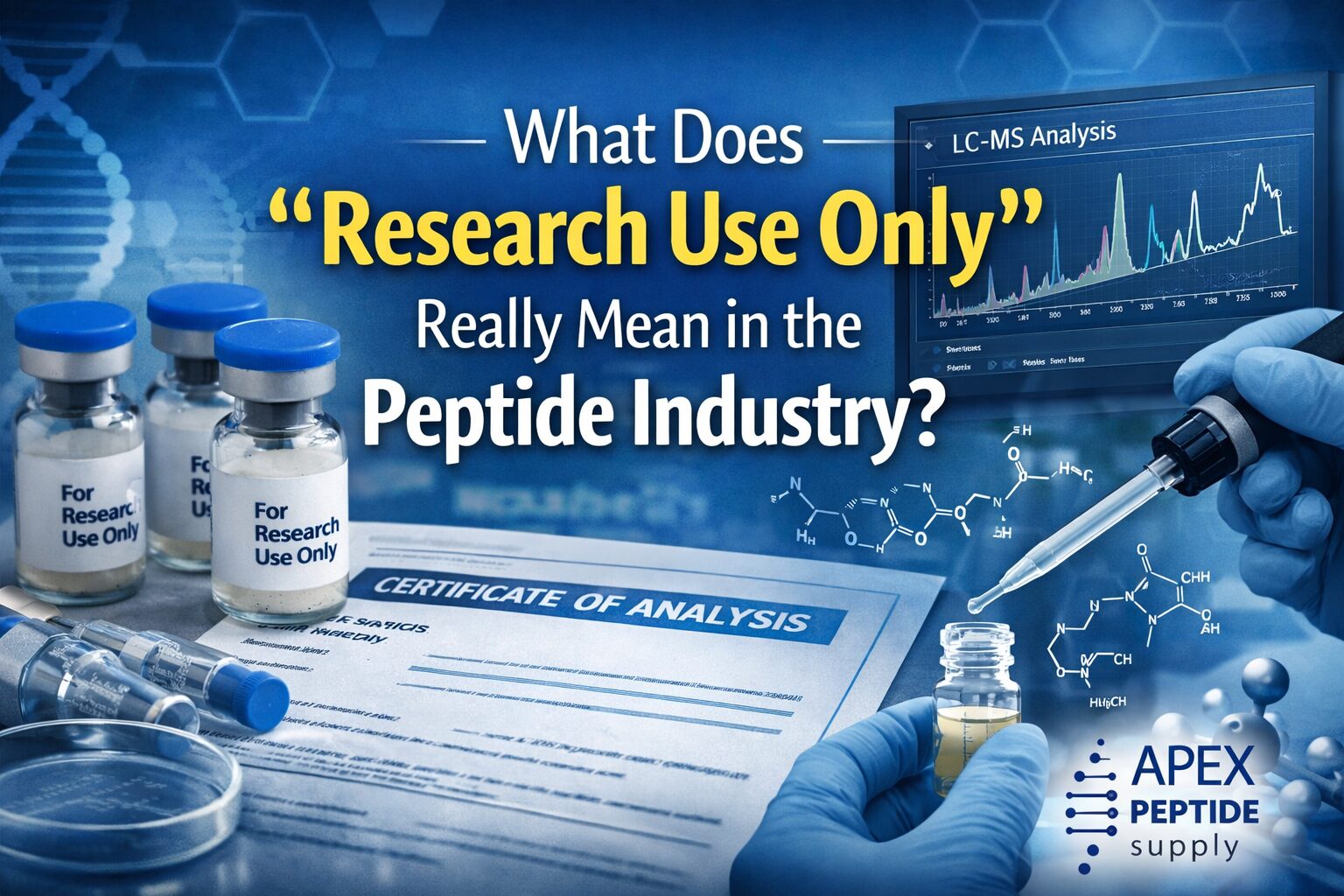
We support amino acid structure evaluation and internet peptide material analysis for groups that need even more trusted focus setting and set analysis. HPLC-tested indicates the sample was gone through high-performance liquid chromatography to separate the target peptide from impurities. The purity percent is typically computed from the primary height location split by the total integrated height area.
The pureness of peptides is generally evaluated making use of high-performance liquid chromatography (HPLC). HPLC divides peptides based on their communications with a fixed phase, permitting contaminations and spin-offs to be determined and measured. In addition, mass spectrometry (MS) can be utilized to confirm the peptide's molecular weight and series, giving additional verification of purity by finding impurities and degradation items. If you have actually ever before gotten a synthetic peptide for a lab experiment, you have actually most likely saw a purity portion on the certificate of analysis-- commonly worths like 95%, 98%, and even 99%. Peptide purity is an essential high quality metric that informs you what fraction of a peptide example is the desired product versus unwanted spin-offs.High-performance Fluid Chromatography
It is an area-percent pureness measurement, not a total identity or activity examination. Significantly, purity portions describe chemical structure just-- they do not indicate sterility or organic suitability. Peptides from Maxed Out Compounds are supplied solely for laboratory research use and are not meant for human or veterinary purposes. Peptide purity is normally revealed as a percentage, such as 95% or 98%. This number stands for just how much of the sample is made up of the preferred peptide sequence. For many laboratory applications, a pureness of 95% or greater is taken into consideration research-grade.Stability Contrasts
The quality and reliability of a peptide pureness dimension rely on Biotechnology technique specifications and documentation top quality. The mobile stage, typically a mix of water, acetonitrile, and an acid modifier, is kept in reservoirs and provided via the system by a high-pressure pump. The pump maintains exact flow rates, commonly in the range of 0.5 to 2.0 mL/min depending upon the method and column style. High pressure forces the mobile phase with securely packed bits inside the column, creating sharper splittings up and higher resolution than conventional low-pressure chromatography.
Many peptide vendors and study laboratories rely on several reputable analytical methods. All products are sold for research study, research laboratory, or logical purposes only, and are not for human use. Product descriptions and categorizations do not suggest any type of healing end results. At Chameleon Peptides, every product ships with comprehensive third-party screening paperwork. You can learn more regarding our logical testing procedures on our screening and high quality web page. A 2016 study released in Nature located that more than 70% of scientists had actually tried and fallen short to reproduce one more researcher's experiments.